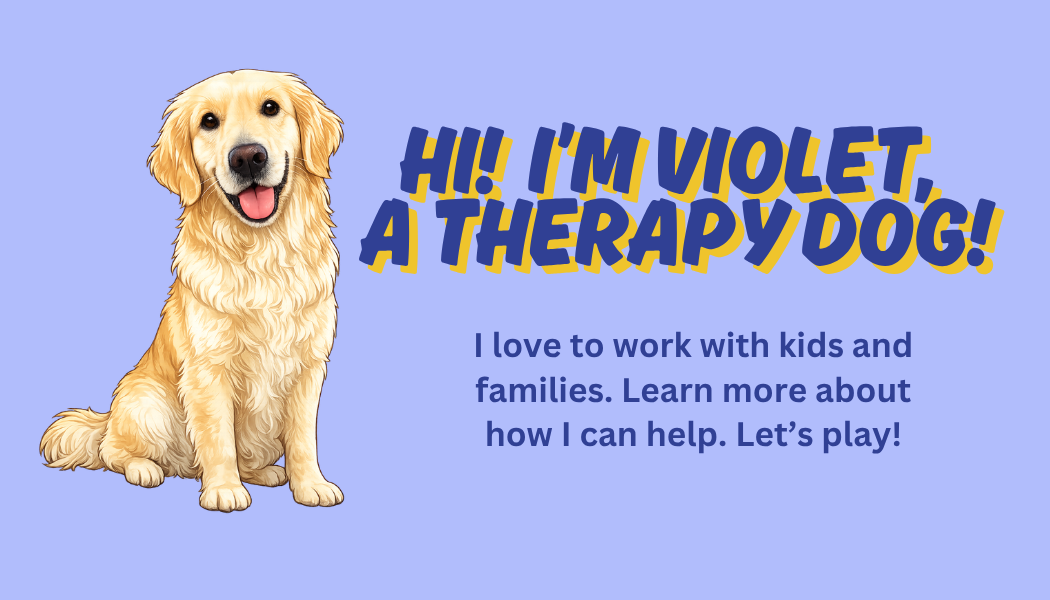
What is Canine Assisted Therapy?
Research has shown that adding animals to the therapeutic process promotes problem solving, empathy, stronger attachments, higher cognitive functioning, and the strengthening of social skills.
Many people can benefit from Canine Assisted Therapy. Those experiencing anxiety disorders, attention-deficit hyperactive disorders, depressive disorders, or social challenges can gain valuable tools.
Meet Violet
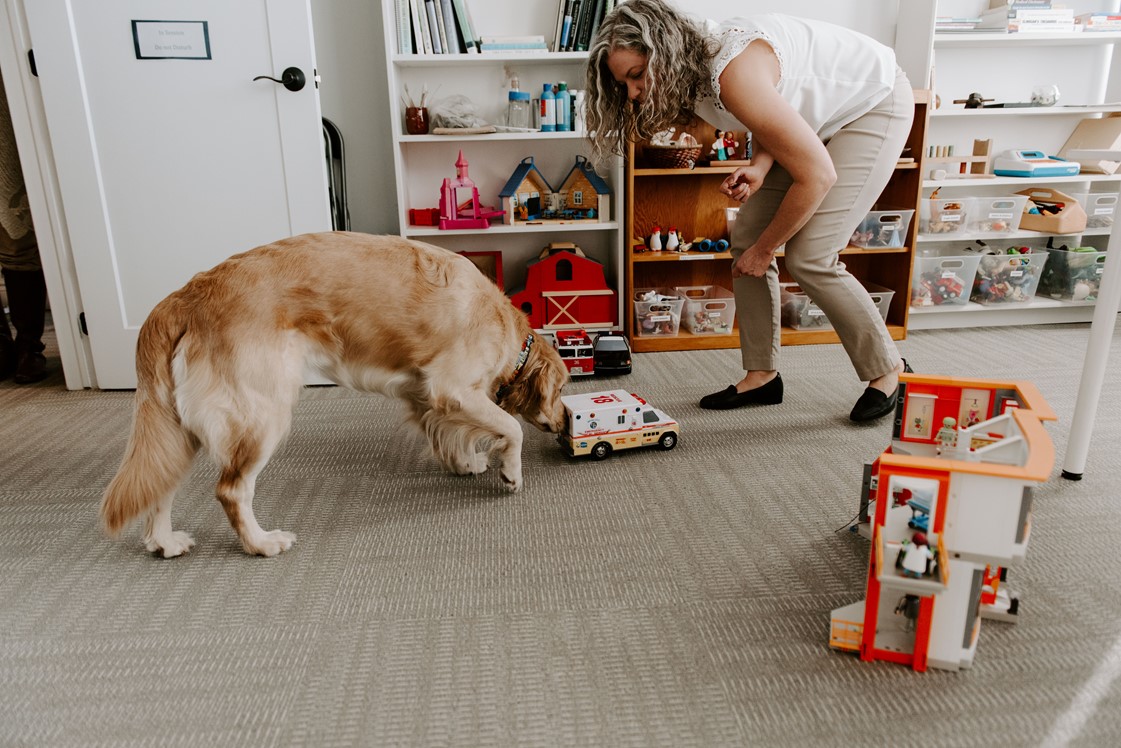
Violet is a gentle Golden Retriever and our Canine Therapist. She is assisted by her co-therapist, Sarah, and they offer support through Canine Assisted Therapy.
Canine-Assisted Therapy is offered intentionally to children and families when it aligns with their therapeutic goals. Violet’s calm presence and warm demeanor helps create a sense of safety, ease anxiety, and support emotional regulation during sessions.
If you are interested in Animal-Assisted Therapy in your sessions, please speak with Sarah to determine whether this approach is right for you and your child.

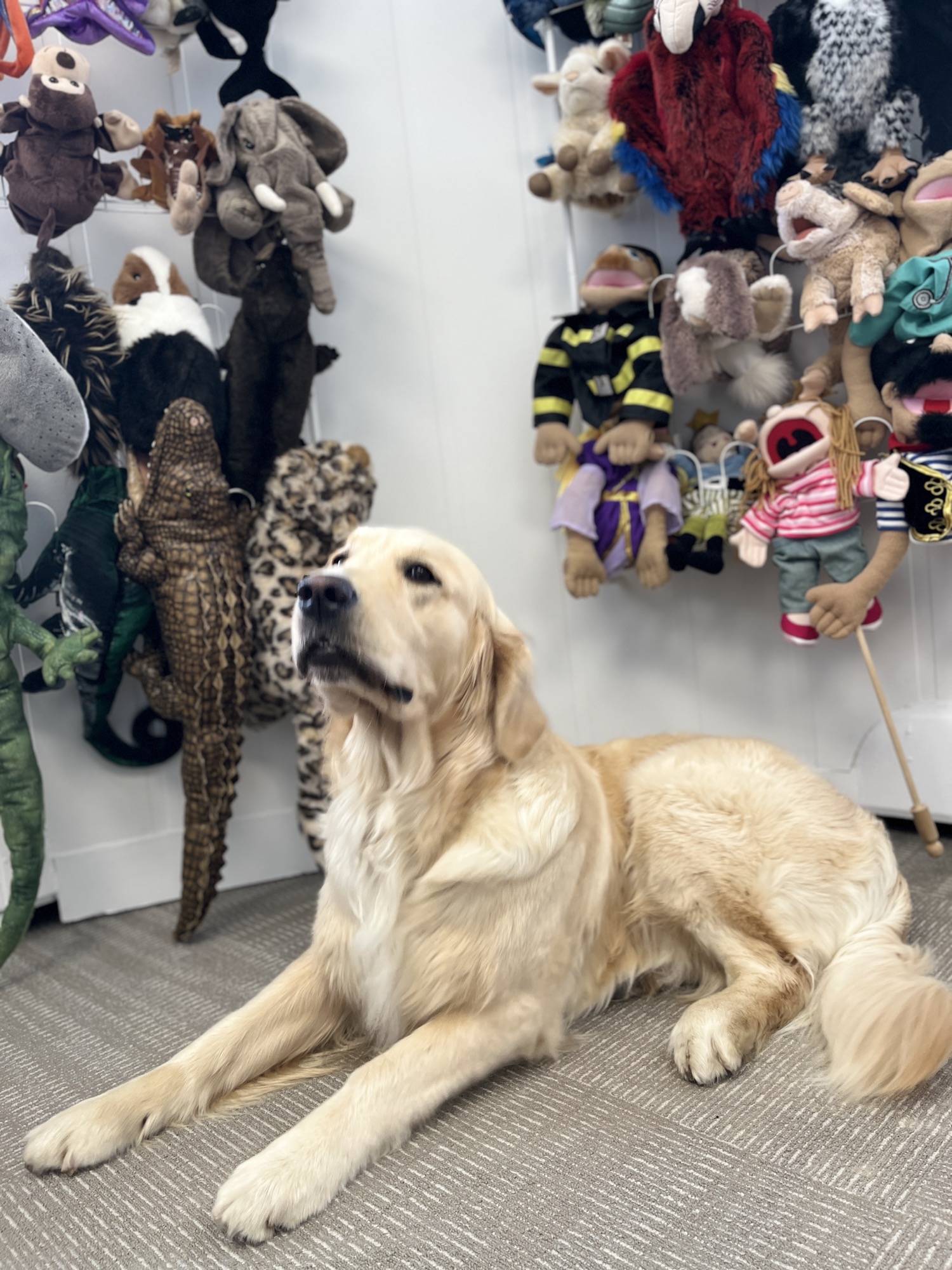
Violet, Canine Assisted Therapy Dog

What does a typical session look like?
Violet, Canine Assisted Therapy Dog
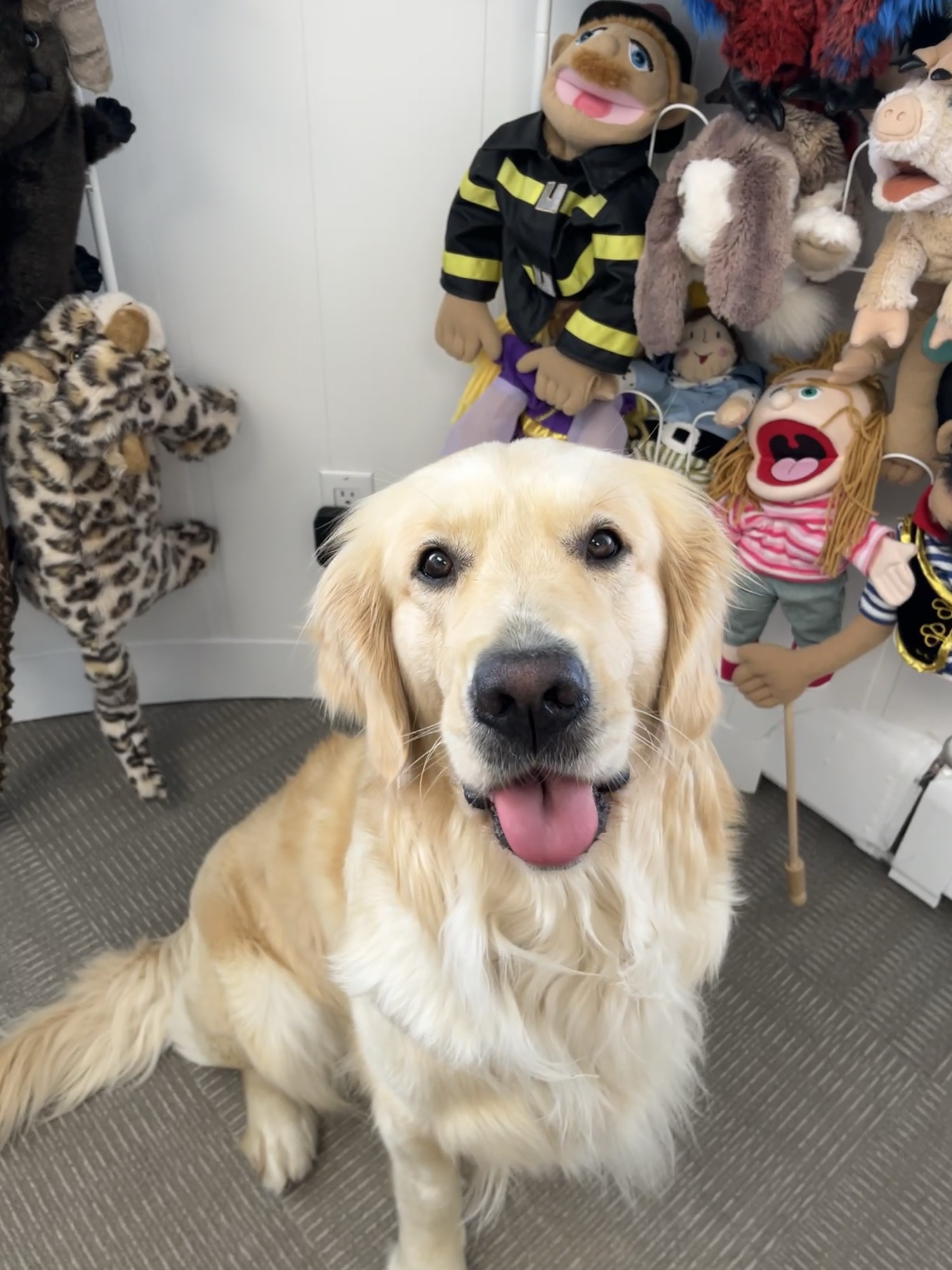
Canine Assisted Therapy with Violet includes talk and play therapy. In the play therapy session, Violet’s presence increases the opportunities for reflecting feelings and invites the opportunity to purposefully change a negative emotional state through constructive and positive interaction. The child can play ball with Violet and give her simple commands: stay, go, come. After doing this a few times the client will feel confident in their skills (such as impulse control and memory) and this builds self-confidence.
By interacting with Violet, the client can learn to exercise control in their internal and external environment through the use of obedience training which can translate into self discipline.
In talk therapy, the therapist may make reflective tracking statements to the therapy dog instead of directly to the client: “Violet appears to be bored today. What do you think she needs?” Having a dog in session allows the child to better accept their own feelings and behaviours because Violet has them too.
Through interacting with Violet, your child can build social skills, decrease aggressive or impulsive behaviours and increase their empathy, their ability to self-regulate, and offer an opportunity to foster healthy attachment by connecting to a beloved canine friend.